
You can add real, measurable power to your car without spending a fortune. The best horsepower upgrades under 500 dollars combine low cost, straightforward installation, and genuine performance gains you’ll feel on every drive. Here’s a quick look at what’s worth your money:
- High-flow drop-in air filter ($30–$80): a small horsepower gain, reusable, zero risk
- Cold air intake kit ($150–$300): a moderate horsepower gain on naturally aspirated engines, better throttle feel
- Cat-back exhaust or resonator delete ($150–$400): a modest horsepower gain depending on the platform
- Performance tuner/ECU flash ($400–$500): can provide notable horsepower gains on NA cars, more on turbocharged engines
- Manual boost controller ($50–$150): can modestly increase boost for turbocharged engines only
- Fuel system cleaner ($20–$50): helps restore lost power on higher-mileage vehicles
- Synthetic oil, iridium plugs, quality filter ($60–$150): supports engine health, helping protect power gains
The upgrades that deliver the most bang per dollar depend heavily on your engine type. Turbocharged cars respond dramatically to tuning; naturally aspirated engines benefit more from intake and exhaust flow improvements. Stack two or three of these mods and the gains multiply.
Horsepower upgrades under $500: upgrading your air intake
A cold air intake is the most popular budget horsepower mod for a reason. It replaces the restrictive factory airbox with a larger pipe that pulls cooler, denser air from outside the engine bay, and the result is sharper throttle response, a noticeable intake sound, and a modest power gain.
On naturally aspirated engines, quality kits deliver 5–15 hp and take 30–60 minutes to install with basic hand tools. Brands worth trusting include K&N, Injen, AEM, and Mishimoto. Skip the no-name options entirely.
- Drop-in filter ($30–$80): the safest entry point; provides minor horsepower gains, washable and reusable, fully reversible for warranty purposes
- Cold air intake kit ($150–$300): meaningful throttle improvement, often more noticeable on turbo platforms where reducing pre-turbo restriction helps
- MAF sensor placement: critical for avoiding check engine lights; only reputable brands engineer the intake for correct sensor signal
Pro Tip: Search YouTube for your exact car model before buying. A vehicle-specific tutorial will tell you whether your MAF sensor position creates any fitment complications with aftermarket intakes.
If you drive a stock naturally aspirated commuter and expect a dramatic dyno number, temper expectations. Most owners notice the sound and throttle feel first. The intake experience often changes more than the raw speed, and that’s not a bad trade for $150.

Budget exhaust upgrades that free up real power
An engine is essentially an air pump. The easier it breathes out, the better it runs, and that is exactly why a free-flowing exhaust pairs so well with an intake upgrade.
Bolt-on exhaust components under $500 include:
- Cat-back systems ($200–$450): replace everything from the catalytic converter back; improve flow, reduce back pressure, and add an aggressive exhaust note
- Resonator delete ($50–$150): removes the resonator for a louder, freer-flowing exhaust path
- High-flow catalytic converter ($100–$300): reduces restriction while keeping emissions legal
Expected gains run 5–15 hp depending on the vehicle and how restrictive the factory exhaust was. Pairing an exhaust upgrade with a cold air intake compounds the benefit because both ends of the engine breathe better simultaneously.
A few things to watch:
- Check your state’s emissions laws before removing or replacing catalytic converters. California, for example, has strict CARB compliance requirements.
- A resonator delete on some vehicles can introduce an unpleasant drone at highway speeds. Research your specific platform before committing.
- Exhaust work often requires a lift or jack stands. If you’re not comfortable underneath the car, a shop can handle a cat-back swap in under two hours.
How performance tuners deliver gains within a $500 budget
A performance tuner rewrites your engine’s control unit (ECU) map, adjusting fuel delivery, ignition timing, and boost pressure to extract more power from the same hardware. This is where the biggest gains per dollar live, especially on turbocharged cars.
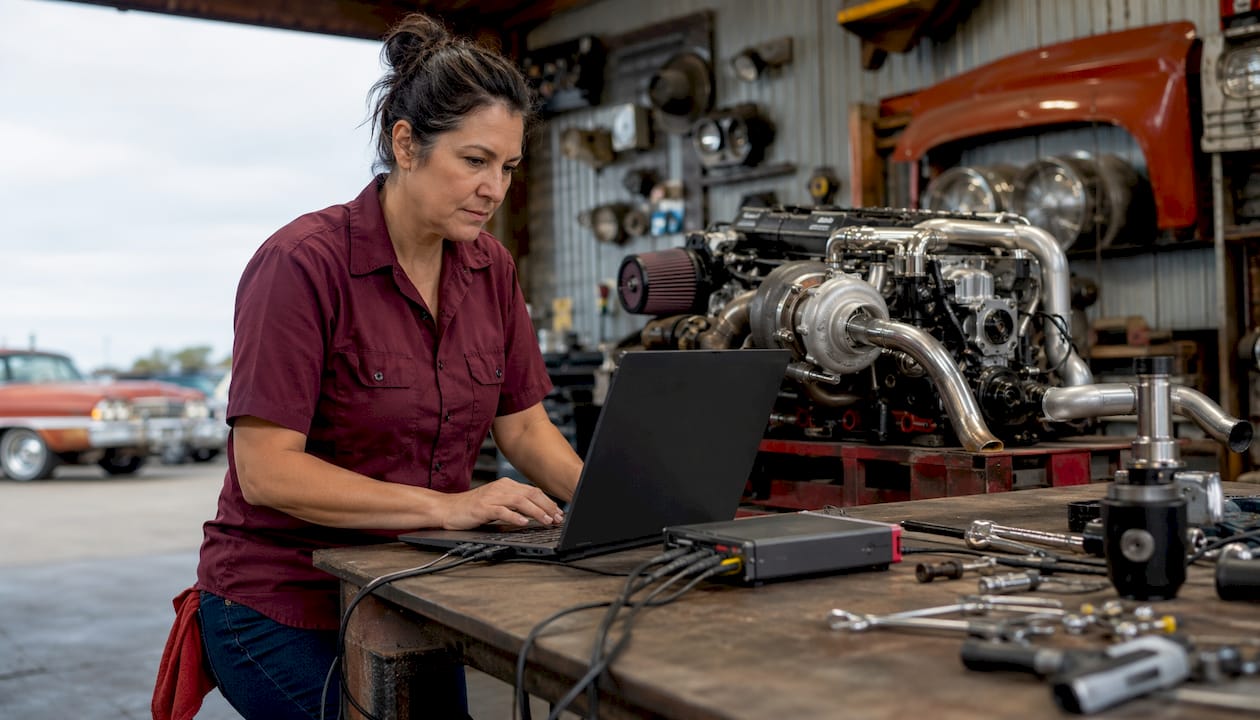
Off-the-shelf flash tuners cost around $400–$500, providing power gains that vary based on engine type and tuning details. Turbocharged engines generally see more notable increases, while naturally aspirated cars see moderate gains.
What to know before buying:
- Avoid cheap plug-in “chips”: the $25 plug-in devices on eBay and Amazon do not communicate with your ECU and deliver zero real horsepower. Real tuning devices write new maps directly to the ECU.
- Off-the-shelf vs. custom tune: generic tunes work well on stock or near-stock cars. Custom dyno tunes cost more but extract significantly higher gains when paired with hardware mods.
- Warranty implications: an ECU tune can void your powertrain warranty. Weigh that risk against the performance benefit.
- Vehicle compatibility: tuners like COBB Accessport, SCT X4, and HP Tuners are platform-specific. Confirm compatibility before purchasing.
Pro Tip: If your budget is tight, prioritize the tuner over the intake on a turbocharged car. The tune alone will outperform an intake alone by a wide margin, and you can add the intake later for a compounded gain.
For a deeper look at how real ECU tuning works versus gimmick chips, the performance chip breakdown at Ozkonickustomz covers the key differences clearly.
How a boost controller adds power to turbocharged engines
A boost controller manages the pressure your turbocharger produces. The factory setting is conservative, leaving headroom that a boost controller can safely use. A basic manual boost controller typically costs $50–$150 and is one of the more affordable cheap horsepower enhancements for turbo owners.
- Works only on turbocharged engines. Skip this entirely if your car is naturally aspirated.
- Manual controllers are simple: you set boost pressure with a dial and a bleed valve. Electronic controllers offer more precision but cost more.
- Gains depend on how much factory headroom exists. Some platforms respond well; others are already running near safe limits from the factory.
- Always pair a boost increase with a supporting tune. Running more boost on a stock fuel map risks lean conditions and engine damage.
The risk here is real. Too much boost without proper fueling and timing adjustments can cause detonation. If you’re new to forced induction, consult a tuner before touching boost levels.
Fuel system cleaning as a low-cost power restorer
Fuel system cleaning isn’t a modification. It’s maintenance that happens to feel like one. Over time, fuel injectors accumulate deposits that reduce spray quality, hurt combustion efficiency, and rob you of power you already paid for.
A bottle of quality fuel injector cleaner runs $20–$50 and goes straight into the gas tank. For higher-mileage vehicles, a professional fuel system service at a shop cleans injectors more thoroughly and can restore throttle response that has gradually faded. Neither option adds power beyond the car’s original spec, but both recover power that deposits have stolen.
This is the right first step for any vehicle over 60,000 miles before spending money on other affordable engine upgrades. There’s no point bolting on an intake if dirty injectors are already limiting combustion.
Why engine protection belongs in your upgrade plan
Adding power stresses components that were engineered for stock output. Skipping basic protection upgrades while chasing horsepower is a fast way to shorten engine life.
- Synthetic motor oil: handles higher heat and shear stress better than conventional oil, especially after intake or tune upgrades
- Quality oil filter: a cheap filter under increased stress can bypass or collapse; use a name-brand filter rated for your engine
- Iridium or platinum spark plugs: ignition upgrades on cars over 60,000 miles can restore combustion efficiency and support power gains from other mods
- Cooling system check: more power means more heat; verify your coolant is fresh and your thermostat is functioning correctly
These items cost $60–$150 combined and protect every other upgrade you install. Think of them as the foundation. A tune on a car with worn plugs and old oil won’t perform as well as the same tune on a well-maintained engine.
What gains are realistic, and how to maximize them
Horsepower gains from affordable engine upgrades depend on engine architecture, fuel quality, altitude, and what’s already installed. Dyno charts specific to your platform are the only reliable reference. Marketing claims are not.
The biggest insight most budget builders miss: combining an intake and a tune delivers 2–3 times the gains of either mod alone. On a 2021 Mustang GT, testing showed the intake alone added minimal power, while the intake-plus-tune combination produced 20–25 hp. That synergy is where the real value lives.
Pro Tip: Build in order: protection upgrades first, then intake, then exhaust, then tune. Each layer supports the next, and the tune should always come last so it can account for all the hardware already installed.
Ozkonickustomz sources parts directly from vetted manufacturers, which means fitment and quality are verified before anything ships. For performance builders who’ve been burned by counterfeit parts or wrong fitments from generic retailers, that sourcing standard matters more than it might seem.
Key Takeaways
Stacking intake, exhaust, and tune upgrades together delivers 2–3 times the horsepower gains of any single mod alone, making combination builds the best value under $500.
| Point | Details |
|---|---|
| Drop-in filter first | A $30–$80 high-flow filter is the safest, fully reversible starting point with minor 2.6%–5 hp gains. |
| Cold air intake gains | Quality kits deliver 5–15 hp on naturally aspirated engines; turbo cars gain more from reduced pre-turbo restriction. |
| Tuner is the biggest lever | Off-the-shelf ECU tuners at $400–$500 add 5–20 hp on NA cars and 25+ hp on turbo platforms. |
| Avoid fake chips | Plug-in “performance chips” under $50 do not communicate with the ECU and deliver zero real horsepower. |
| Protect before you upgrade | Synthetic oil, iridium plugs, and a quality filter protect engine longevity when output increases. |
Get quality parts that actually fit your build
Ozkonickustomz stocks vetted aftermarket components sourced directly from manufacturers, so you get correct fitment and real quality without the guesswork. Whether you’re starting with a drop-in filter or planning a full intake-plus-tune build, the automotive hardware and performance parts at Ozkonickustomz are built to support your upgrade path from the first mod to the last. Browse the full catalog at ozkonickustomz.com and build with confidence.